
World 5 of 22 · Different laws
Transmutation
The laws of nature themselves change, and the change arrives as a front.
- The laws themselves
- Identity
- A changing ground
- Memory
Text: Nebo D. Lukovich ·
Established science Speculative model
Some scientists think that distant parts of our universe might have slightly different laws. Certain theories allow this, although no observation has reliably confirmed it so far. Such differences would appear as small changes in physical constants, such as the fine-structure constant, the gravitational constant or the speed of light. Some measurements of light from distant quasars have suggested a tiny change in the fine-structure constant, but those results are disputed and remain unconfirmed. Even if such differences exist, present-day science is fairly confident that they are small. The same applies to possible changes in the laws over the billions of years of the cosmos’s existence.
Let us now consider a universe in which physical laws differ from place to place and from time to time.
Imagine waking one morning to find that your arm responds in a new way. A movement that took one beat yesterday now takes two. Things around you are still in the same places, but the rules governing their motion have changed.
This is exactly what happens in Transmutation, according to a strict order. Change spreads through the world as a front, so an inhabitant can see it coming. By the time it arrives, the internal connections of the inhabitant’s body must already be adapted.
We should also remember that the varied laws of this imagined world are very different from ours. Familiar structures such as galaxies, stars, planets, atoms and elementary particles can therefore give us little guidance. The physics there is entirely alien to us, and it varies from region to region as well.

A law governing laws
Speculative model
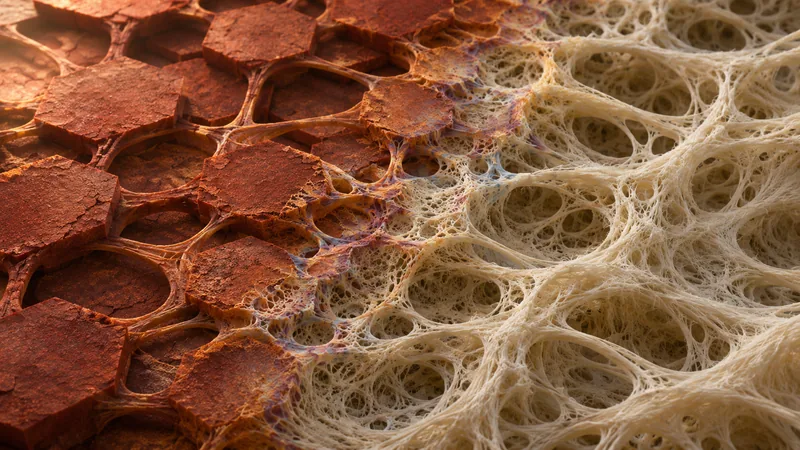
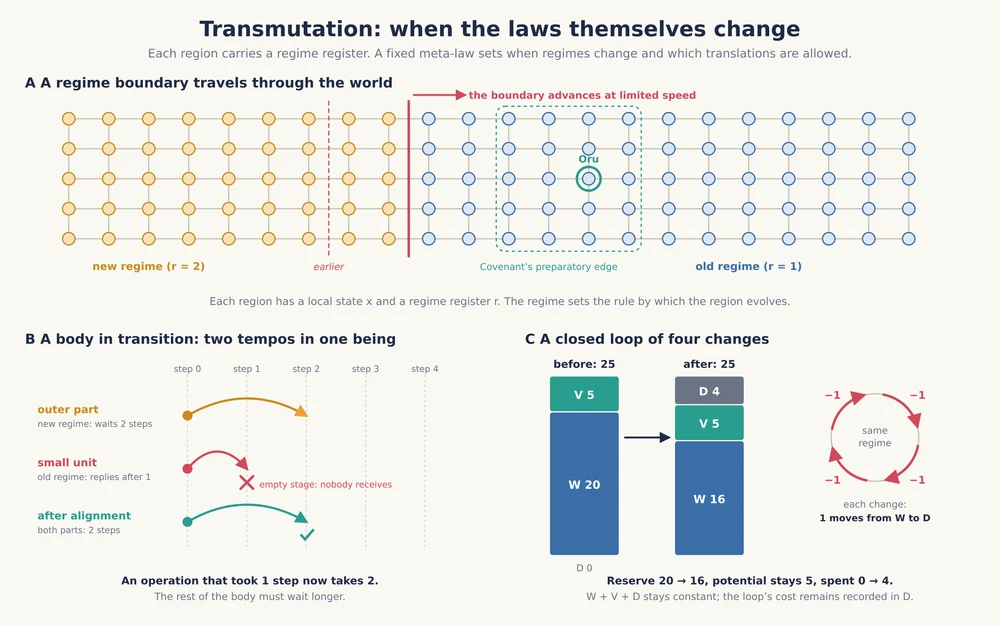
In Transmutation, every region carries two labels. The first is its local state, denoted by x. The second is a regime register r, which says which regime currently applies there. The regime determines the rule by which the region evolves. Above all the regimes stands one fixed rule, a meta-law, specifying when regimes change and which translations between them are allowed. We had to introduce the meta-law into our thought experiment because, without it, chaos would prevail and probably prevent any life from arising in such a universe.
Transmutation’s meta-law requires boundaries between regimes to advance at a limited speed through neighboring regions. Change therefore reaches each region gradually. I think this is the world’s most important concession to its inhabitants. Those living near a boundary have time to prepare, if they know how to read the signs.
Every preparation, of course, has a cost. In this imagined universe, we track three quantities for each region. The reserve W is what can still be spent on work. The spent portion D is what has already been used. The potential V is the value the organization, taken as a whole, has by virtue of its form in a given regime. The sum of these three quantities always stays the same. A change of regime can alter the potential of the same organization. That difference enters the work account, together with the cost of translation itself.
Consider a region that goes through four regime changes and returns to its original regime and state. At the start, the reserve is twenty, the potential five and the spent portion zero. Each change costs one unit. At the end, the reserve is sixteen, the potential is five again and the spent portion is four. The total is still twenty-five. The loop has closed, and its cost remains permanently recorded in the spent portion. The total loss of available work equals the sum of the costs of all the transitions.
The Archipelago of Laws
Speculative model

We call the largest whole the Archipelago of Laws. It consists of large regions with different regimes, like islands with their own rules. For an inhabitant, the crucial question is which route allows its body to pass into a neighboring region. Some boundaries permit a viable continuation, with the appropriate preparation, of course. That preparation is supported by the Spiller, a source of work with a finite initial reserve that is itself gradually consumed.
Our habitat is called Covenant. It is a stable region with a preparatory edge, where inhabitants watch for approaching change and prepare their translations in advance. The value of such a habitat is measured first by the length of its warning. It is also measured by how many processes have a viable realization in the neighboring regime.
The Translator
Imagined beings

Like many other universes, this one has numerous inhabitants and many kinds of creatures that differ greatly from one another. Their circumstances, however, give almost all of them certain traits in common.
We will take one inhabitant of Transmutation as our example and call it a Translator. It survives by transferring, or translating, the relationships of its body into a different physical fabric when the time comes. With each memory it must also preserve a way of reading it. It is vital to connect records from the old regime to parts that can use them in the new one. Translation therefore covers the whole route, from the preserved trace to the next action.
This being senses the approach of a boundary through control operations, small familiar actions it repeats continually. While all is well and the boundary is far away, each response arrives on its proper beat. As the boundary approaches, the response begins to lag or change shape. The Translator then compares the trace it receives with its stored model and, naturally, prepares the appropriate translation.
The hardest part is coordination. Take a simple example. A bodily response used to require one step; in the new regime, it will need two. The other parts of the body must therefore wait longer. Otherwise, an arriving response would reach its recipient at the wrong stage of the task. During a transition, different parts of the same body temporarily operate under different rules. The body survives by keeping them in agreement. A Translator’s body must be able to carry out the same operation even in a regime where it takes twice as long.
Oru received a warning from the preparatory edge. The boundary was coming faster than the maps had predicted, and his account showed that he lacked the reserve for the final stage of translation. He sent a request to the communal fund and waited.
The supplement arrived, but it was smaller than he had requested.
He began with the outer systems. Their responses now required two steps each, and they adapted quickly. In the parts still operating under the old regime, he slowed reception one by one. He missed one. It was a small system deep beside the memory core. It rarely spoke, and Oru had mistakenly left it off the list.
An outer part sent a message and expected an answer after two steps. The small system answered after one, into an empty stage where nobody received it. The outer part concluded that the connection was failing and sent the message again. The same thing happened. Oru felt his own interior as two voices endlessly missing each other, each keeping its own beat.
Fortunately, he found the omission and managed to slow that system too. Each repeated attempt consumed work, leaving exactly enough for the memory core, without the small reserve he had wanted to save for the end. He translated the core last. Then he accessed the record of the procedure’s beginning. The same relationship returned in a different rhythm, slower and a little blurred at the edges. The boundary passed over him. With an empty reserve, Oru continued through a region that now had different rules. He was satisfied all the same.
Is it the same life
Imagined beings
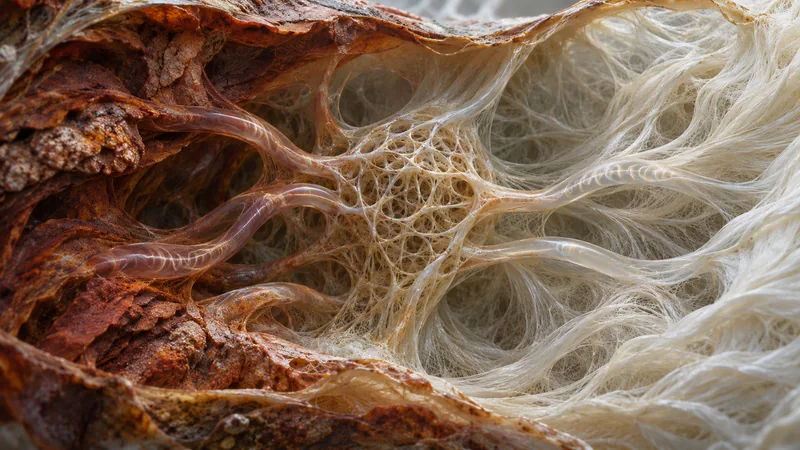
Consider how Translators reproduce. An offspring receives an initial organization and part of the repertoire of translations. This repertoire is an inheritance in the fullest sense. An unfamiliar regime may present an obstacle for which no available translation preserves the necessary relationships. At that point, the body’s ability to continue ends. Sooner or later, this happens to every Translator.
One question remains, posed by this world more sharply than by any of the others. Is a being still the same being after a successful translation? The answer is unclear and difficult to test. We can only speculate about what that continuation of existence feels like from within.
Transmutation’s civilization would maintain special preparatory regions, and the right of access to translation could determine who survives a boundary’s arrival. Every message in its language would carry the label of the regime in which it makes sense. Maps would show how much time each inhabitant had left before the boundary arrived. It seems to me that such a culture would value a carefully prepared transition as a special life skill, perhaps the highest of all.
Is change desirable?
Author’s reflection
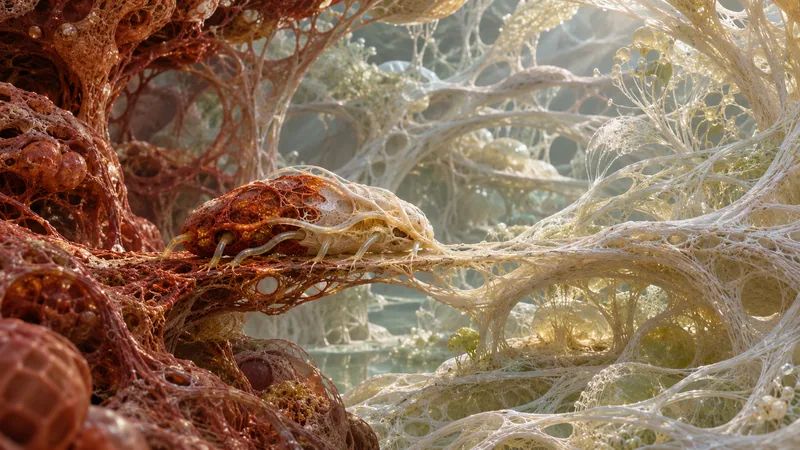
We might draw one conclusion: let us be grateful that we live in a world with fixed laws, where everything is fairly predictable, at least on the macroscopic scale. But is that the whole story? Translation resembles many changes in our own world, major challenges and even suffering. Yet change pushes a person out of their comfort zone, and that is precisely what leads to growth and maturity. We can therefore reach another conclusion: life in Transmutation could give rise to beings of exceptional abilities and accomplishments.
I have also written about how harsh conditions can become a demanding school, and about questioning their interpretation as punishment, in Earth: Prison Planet or School of Life?.
Established science
Scientific footing
Whether constants vary across space and time is a question tested by measurement. A 2011 analysis of light from distant quasars pointed to a slight spatial variation in the fine-structure constant; later measurements have not confirmed it, and laboratory and astronomical limits remain very tight. A world where entire regimes of law succeed one another under a meta-law is our construction.
Sources for this world
- J. K. Webb et al. (2011). Indications of a Spatial Variation of the Fine Structure Constant. Physical Review Letters 107, 191101.
- J.-P. Uzan (2011). Varying Constants, Gravitation and Cosmology. Living Reviews in Relativity 14, 2.
Added by the site’s editors. The sources below support the starting idea, while life in this world remains a thought experiment.
Gallery of this world

Illustrations are AI-assisted and serve as visual analogies. The rule diagrams are the author’s own. This chapter is part of the essay “Five Different Universes”, published on 15 November 2026. The full essay on the Reintegration System blog.